
A Shortcut to Professional Development: Razwana Wahid on Mentoring From Both Sides
Razwana Wahid, Director of Issuing, Solutioning and Programme Delivery at Pluxee International, takes part in the Women in Tech mentorship program as both a mentor and a mentee. She shares how each role has shaped her career, from a promotion to her advice for first-time mentors and mentees alike.
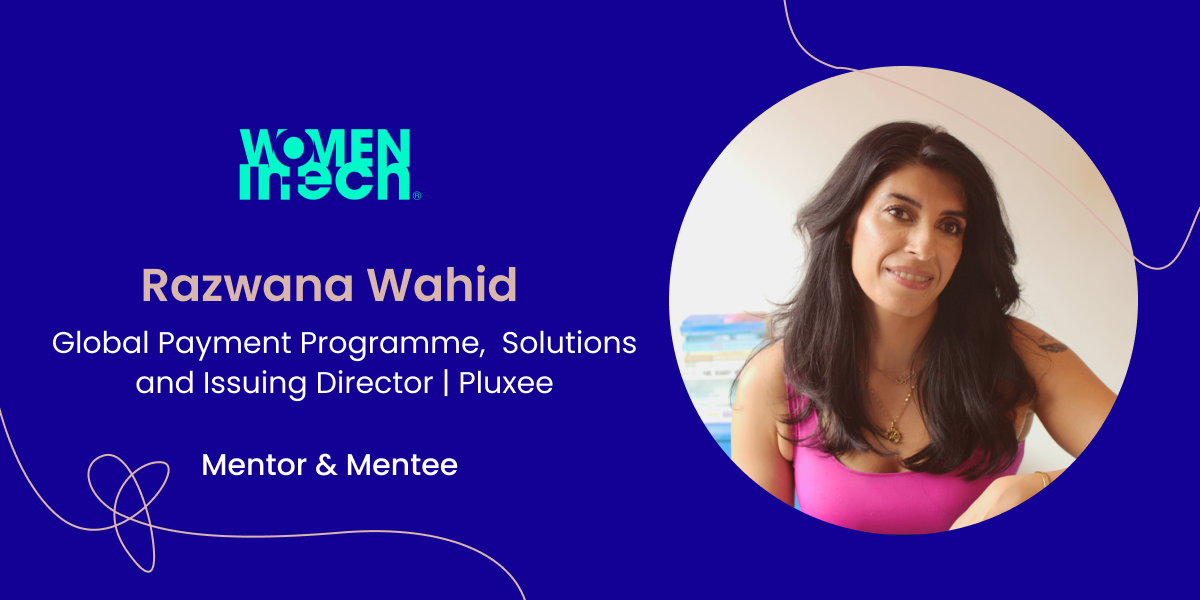
Razwana Wahid, Director of Issuing, Solutioning and Programme Delivery for Global Payments at Pluxee International
“Mentorship means someone finally answering the questions too specific or embarrassing to ask anyone else and a shortcut to professional development others can rarely provide.”
Razwana Wahid is based in Barcelona, Spain, where she serves as Director of Issuing, Solutioning and Programme Delivery for Global Payments at Pluxee International.
Razwana takes part in the Women in Tech mentorship program as both a mentor and a mentee.
As a Mentor: A Relationship That Teaches Both People
Razwana's motivation to mentor focuses on giving back to people earlier in their careers. "Those conversations not only (hopefully) support the mentee, and are great points of learning for me too."
Helping a Mentee Find Her Voice With Leadership
Razwana recalls a mentee who struggled with difficult relationships with leadership, feeling intimidated and unsure how to express her thoughts without sounding disrespectful. "We worked through a script structure that she could adapt and it helped her feel more poised and in control."
How Mentoring Has Shaped Her
Razwana describes mentoring as pushing her to keep learning herself. "It allows me to reflect on my own experience and go do some research if/when a mentee asks a question that I don't have an immediate answer to."
Her Advice to First-Time Mentors
Razwana's advice is to. "Embrace the inspiration and go for it. Every new mentee relationship has its own trajectory and can lead to friendships you didn't know you needed!"
Why She Believes Mentorship Matters
For Razwana, the value of a mentor lies precisely in their lack of a stake in the outcome.
"The mentor has no stake in your career or performance, yet cares enough about it to guide you on your trajectory. Insights from an 'outsider' are priceless precisely because they're objective and have your (the mentee's) interests at heart. It's what makes their feedback different: less filtered, less self-interested, and they actually want to see you succeed for you and you alone."
As a Mentee: Seeking an Objective View
Razwana's own reason for seeking a mentor was the wish for a perspective outside her immediate work. "I was looking for a true objective viewpoint of some challenges I was experiencing, that would start from a conversation about professional life, and would naturally flow into other parts of life. Mentoring is part of continuous learning."
Seeing Her Role With Both a Short- and Long-Term Lens
Razwana's mentor helped her step back from daily tasks to see her position in the team and organization more broadly. "I found that I grew in confidence and presence in the team, that served the business I work for better."
What Having a Mentor Has Given Her
Razwana points to visibility as the specific challenge her mentor helped her work through. "My mentor helped me identify key conversations to have, meetings to join and relationships to build that ultimately led to a promotion for me, and changes in the team that helped everyone grow."
Her Advice to Anyone Considering Becoming a Mentee
Razwana emphasizes coming in with some clarity of your own. "Be clear about what a mentor can support you on. Part of their role is to also help you find focus, however it helps when you arrive with clarity yourself."
When asked what mentorship has meant to her, Razwana describes it as "someone finally answering the questions too specific or embarrassing to ask anyone else and a shortcut to professional development others can rarely provide."
What She Recommends
When asked for a book, tool or resource recommendation, Razwana points to Careless People by Sarah Wynn-Williams, noting that "it speaks about tech, ethics and responsibility."
Following Her Journey
Razwana shares more about her work and perspective on LinkedIn and Instagram.
Ready to start your own mentorship journey?
The Women In Tech mentorship program connects professionals with mentors who have walked the path before them.
Join the Program